Key Takeaways
- UK Mother's Day gives global marketers a valuable head start—study what worked before your May send.
- Subscriber control is the way to go—preference centers, reduced frequency options, and sensitive-event opt-outs all drive stronger engagement.
- Inbox changes are reshaping holiday email strategy—relevance sorting, Gmail Annotations, and SMS are now essential tools for date-sensitive campaigns.
In the UK, Mother’s Day lands earlier in the year—mid-March—while the US and much of Western Europe celebrate in May.
For email marketers who send Mother’s Day campaigns, that gap is an advantage. May senders get a preview: what worked, what didn’t, and how UK teams are adapting to shifting inbox dynamics, AI, and economic pressure.
Today, we’re reviewing ten tactics that every “Mother’s Day in May” sender should consider.
1. Ditch the “Do you want to hear from us?” emails
During the COVID-19 pandemic, a wave of emails emerged letting subscribers opt out of potentially sensitive events like Valentine’s Day and Mother’s Day. At the time, this made sense—most things were approached with extra sensitivity.
These messages are now standard practice—but they come with a downside: they can reinforce the very moments some subscribers would rather forget. Our recommendation: stop sending these emails. Instead, take a page from Hotel Chocolat’s playbook and make this choice part of your overarching preference center. Subscribers can then make a one-time selection to stop receiving these messages on their terms.

2. Give subscribers more control
While the point above is specific to special events, the principle holds true across a far broader context. “Too many emails” is nearly always the top reason for unsubscribes and spam complaints.
Virgin Experience Days handles this challenge head-on, offering subscribers a “send me fewer emails” option that reduces frequency with a single click.
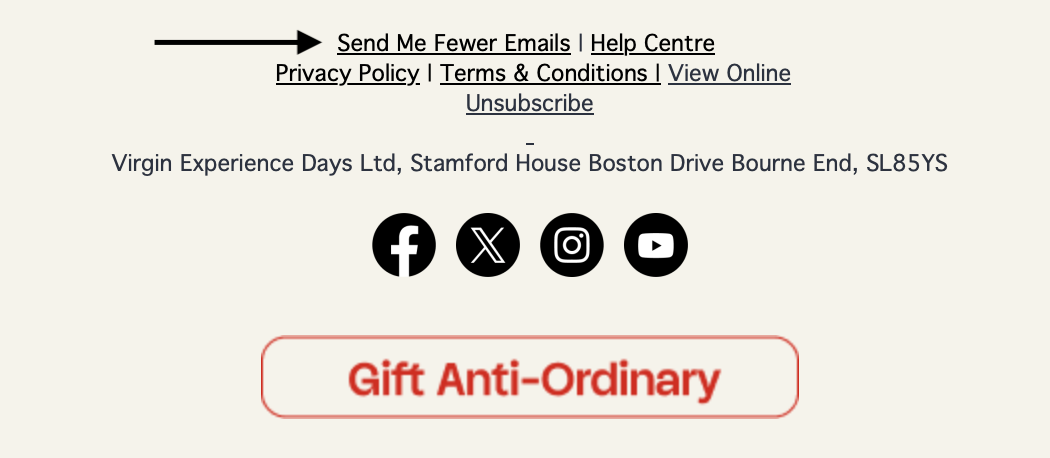
This overlaps with another clear trend we’re seeing in 2026: dedicated emails that promote preference centers. Brands that run standalone campaigns to raise awareness of subscriber controls see a real performance boost as a result. Additional choices give subscribers control over what they receive and how often, boosting relevance and engagement.
3. Invest in striking imagery
AI-generated email summaries may reduce the need to open some messages, but we’re far from the point where imagery doesn’t matter. Many subscribers use preview panes for a quick look at what’s inside, and Gmail’s Annotations now select and display email images directly in recipients’ Promotions tabs.
High-quality visuals remain a powerful driver of opens—and a critical tool for brand reinforcement. Here are a few standout examples:



Belvedere’s image of a gift bag with roses and vodka stops you mid-scroll. Cartier cleverly recreates their butterfly logo using the jewelry they’re promoting. And PizzaExpress uses a subtle micro-animation to catch the eye.
4. Get subscribers scrolling
Research shows that fewer than half of consumers venture below the fold in their emails—a problem made worse by inbox overload. That means a lot of great content goes unseen.
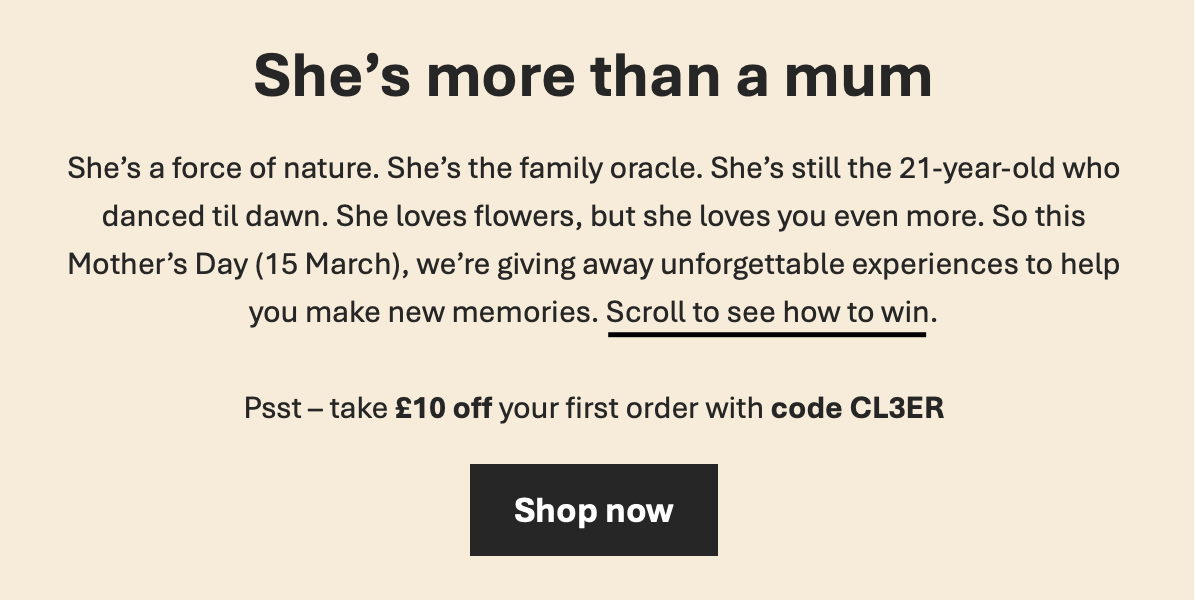
More senders now explicitly encourage readers to scroll. Some use text-based prompts, others use arrows or micro-animations. Bloom & Wild takes it a step further by incentivizing the behavior—”scroll to see how to win”—which is hard to ignore.
5. Help spark inspiration
Buying for that special someone isn’t always easy. For many people, the pressure to get it right is genuinely stressful, and a little helpful guidance goes a long way.
This is where inspiration emails shine. Interflora does this brilliantly (“Don’t worry, we’re here to help. Here are a few top tips for a beautiful and stress-free Mother’s Day”):
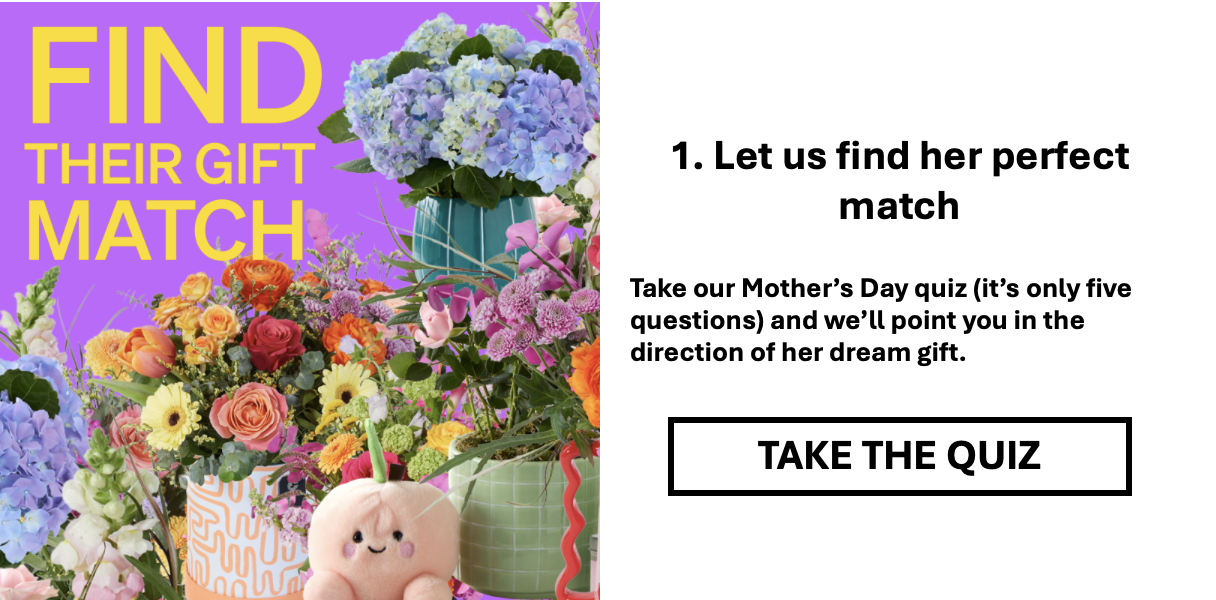
Their email covers a short gift-finder quiz, suggestions for the perfect card message, a reminder that they deliver overseas, a nudge for parents to “celebrate your mom and the mom of your little ones,” and a roundup of their most popular blooms.
Charlotte Tilbury takes a similar approach, encouraging subscribers to “Shop Trending Now” with a view of the most-viewed products over the past seven days.

6. Use text/SMS to compensate for inbox de-prioritization
All successful marketing programs are multi-channel. Email is core, but mobile, social, and apps all play important supporting roles. Many consumers prefer mobile for post-purchase messages like receipts and delivery updates. Cotton Traders provides a great example of how to make this ask (note the clever micro-animation).
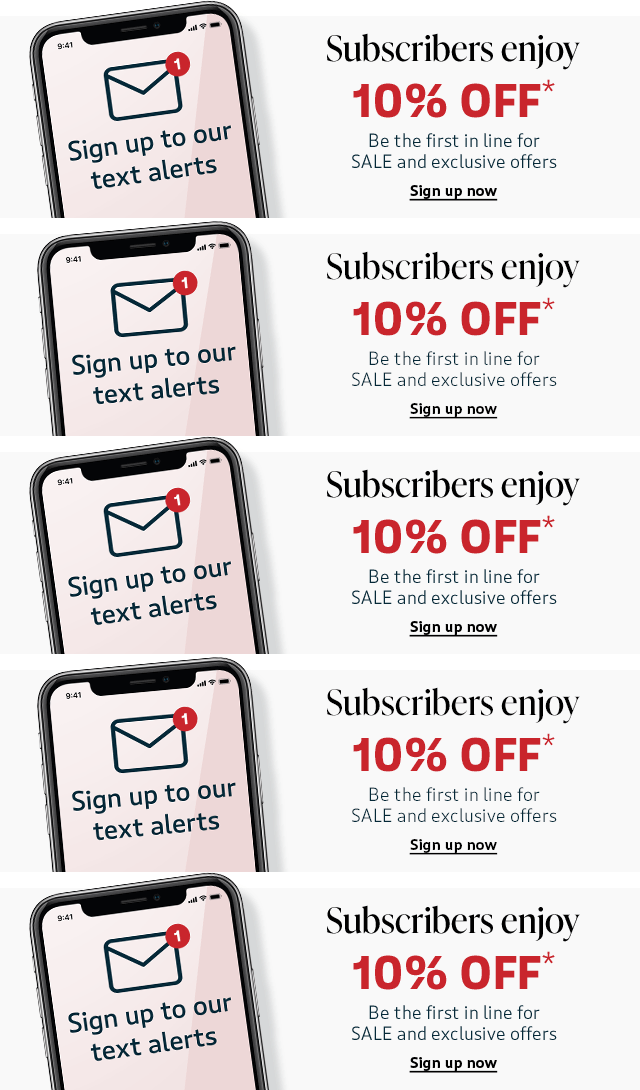
There’s also an important new use case for SMS. As we’ve covered in our Valentine’s Day and April Fools’ posts, Gmail’s relevance-sorted Promotions tab means date-sensitive emails can get buried below messages Gmail deems more relevant. A well-timed text, “Don’t miss our Mother’s Day promotion—check your inbox today!” can drive subscribers directly to the email.
As a sidebar: use Gmail Annotations as part of your relevance toolkit. They tell Gmail exactly what your content is about. Specifying a discount, an expiration date, and a product preview may even earn you a “Featured Deal” card at the top of the Promotions tab—a real winner for relevance!
7. Provide incentives to bring purchases forward
For events like Mother’s Day, encouraging early purchases benefits everyone. It takes pressure off your website, customer service, and fulfillment teams—and it can be framed as a genuine benefit to customers.
Interflora does this nicely:
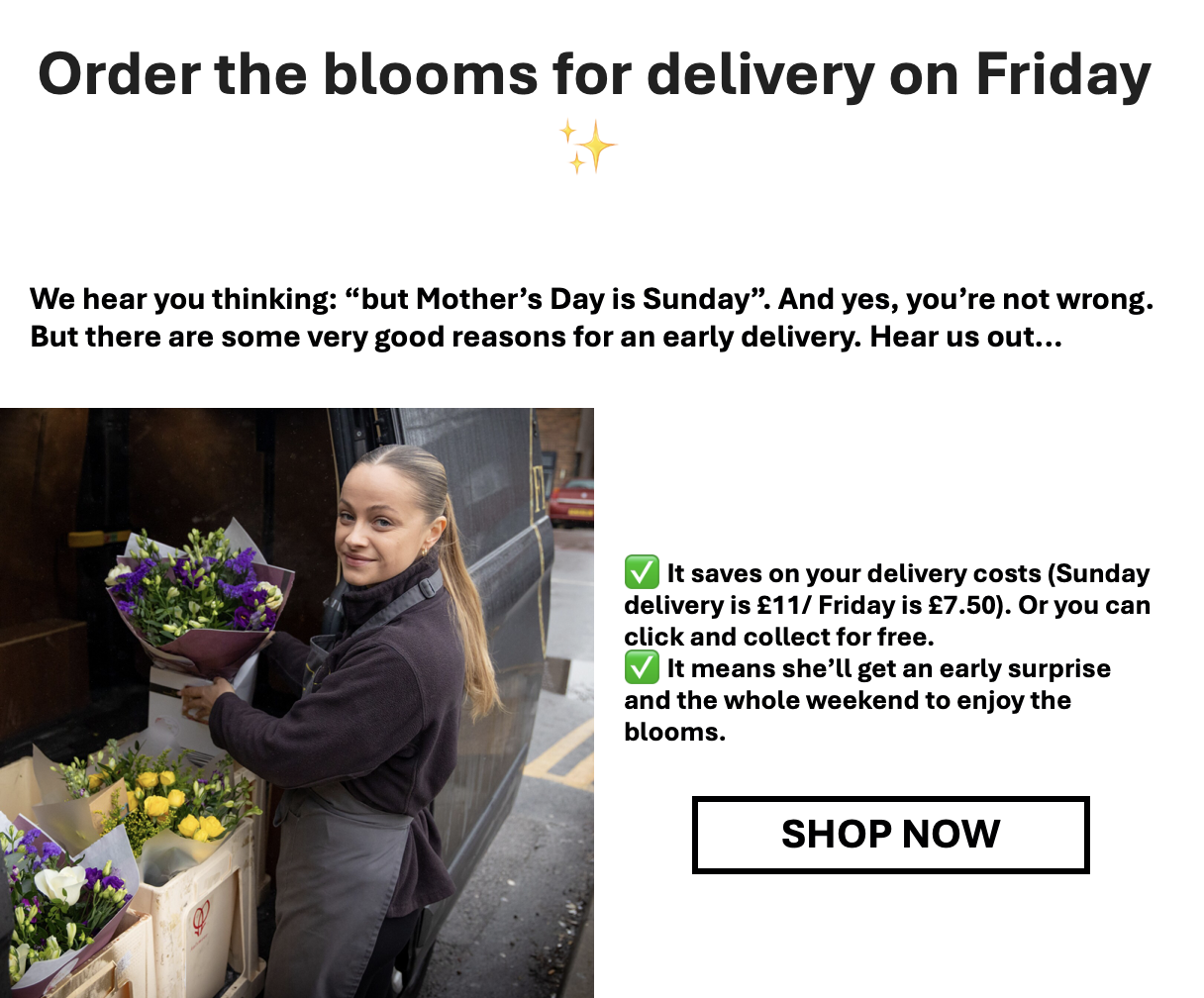
The pitch is simple: order early for cheaper delivery, and mom gets to enjoy her flowers for the full weekend—a genuine win-win.
8. Set a “Remember the date!” reminder
For every organized earlybird, there’s someone who misses the date entirely—and who will not be allowed to forget it. Interflora (yes, again!) has a great solution for this too:
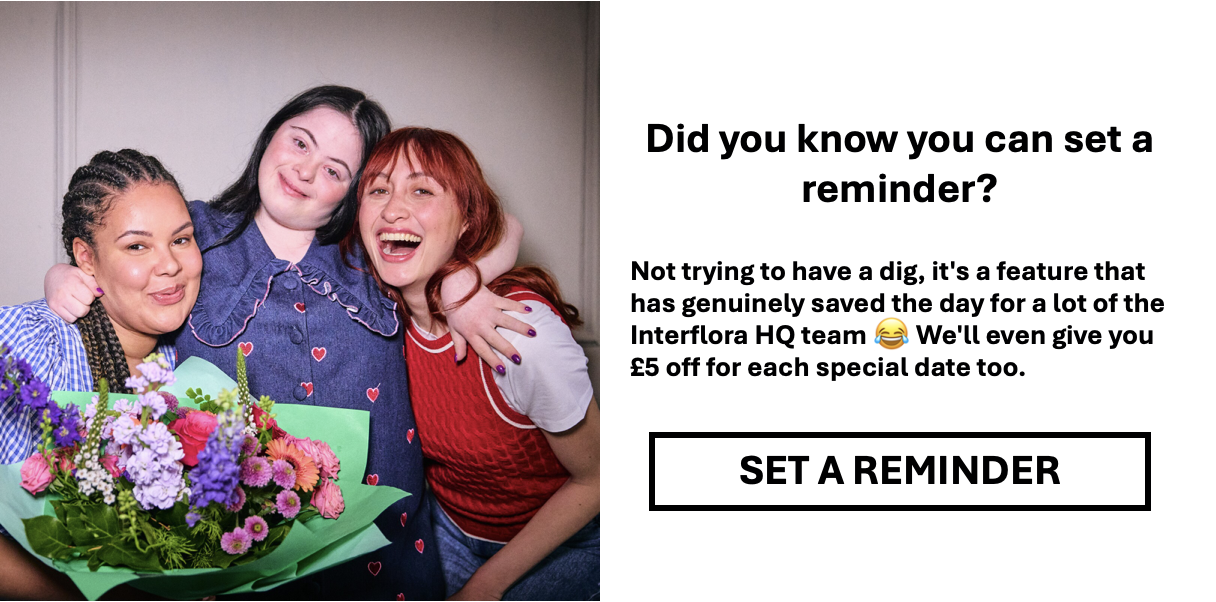
Forgetful folks can use a reminder service in their account to set advance notifications for a range of special events, with parameters for how far out they want to be nudged and a discount for each order placed. What’s not to like?
9. Replace expired offers
Once Mother’s Day has passed, promotional emails become irrelevant fast. Subscribers are far more likely to delete them—or worse, mark them as spam. Smart senders use dynamic content to swap out the expired offer. This is clearly what Look Fabulous Forever was aiming for:
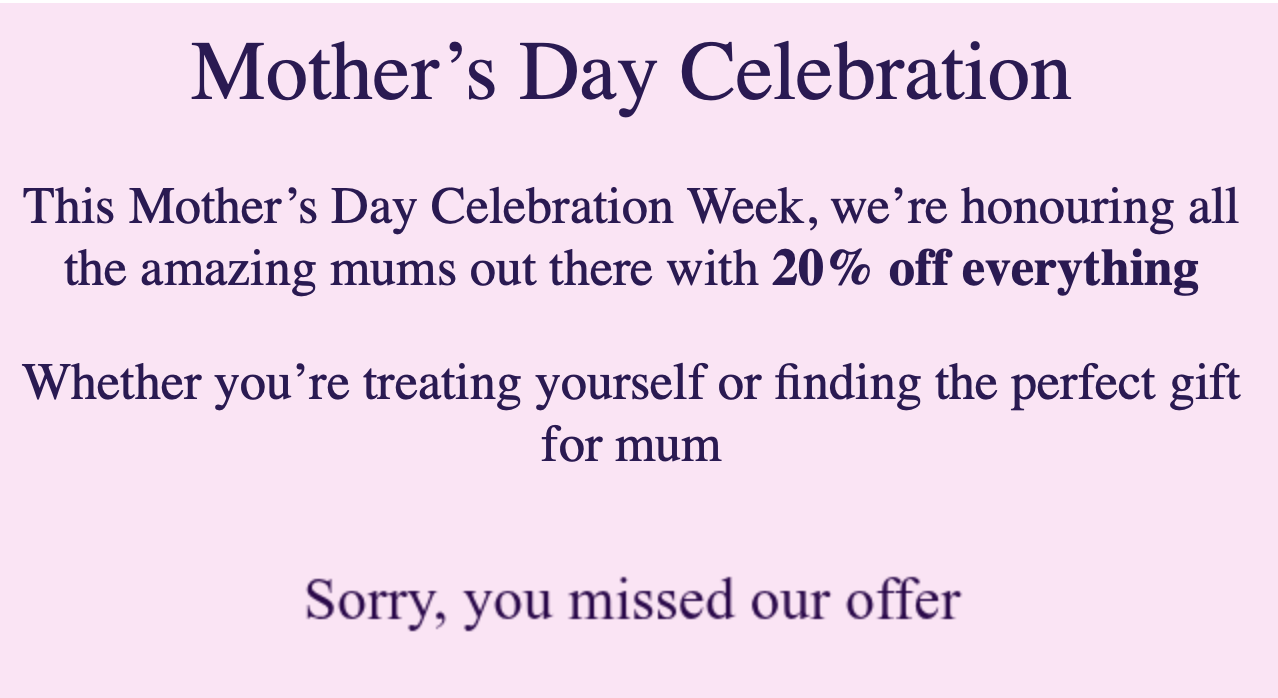
They could have done even more with it. Easter was right around the corner, making it a natural redirect—but the instinct to replace expired content rather than let it linger is the right one.
10. Don’t game the system
Many senders remain fixated on landing in the Primary tab, believing it delivers greater visibility and engagement. In this example, The White Company actively encourages customers to recategorize their emails as “Primary.”
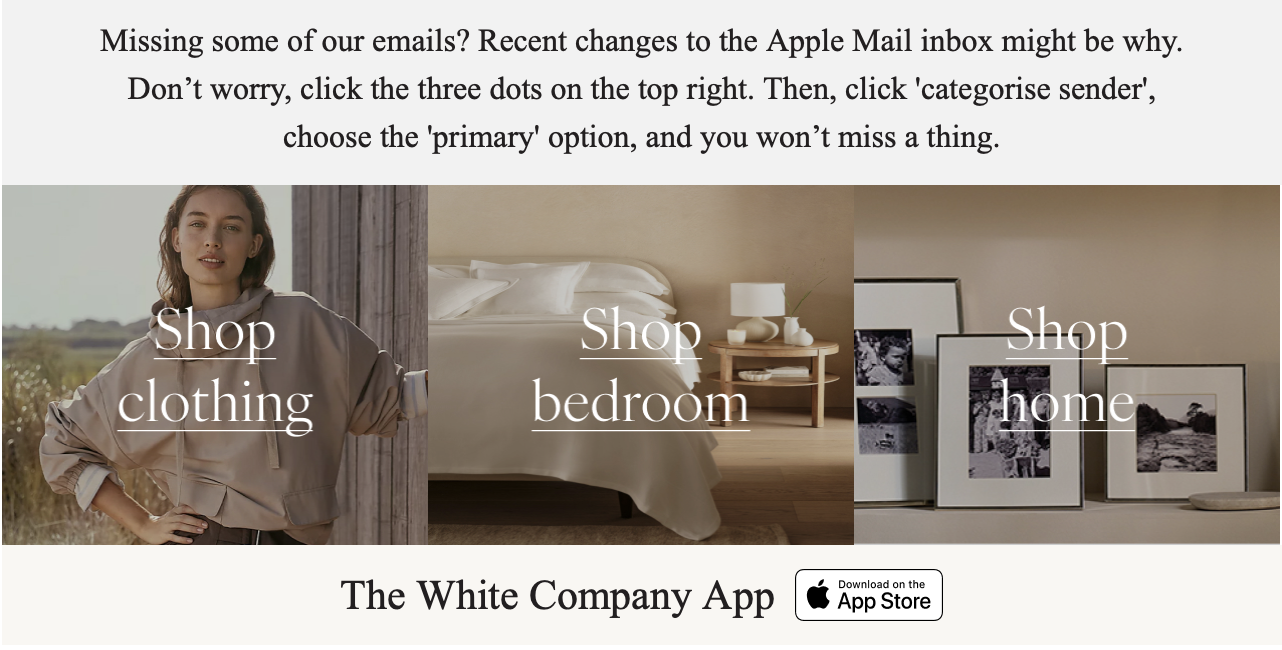
Our advice is simple: don’t do it! At Litmus Live, we heard directly from Gmail, Microsoft, and Yahoo—all three strongly cautioned against any attempt to game the system and explained that senders who do will be penalized. Subscribers expect to find marketing emails in their Promotions tab and engage with them there.
11. (Bonus Tip for US senders) Don’t celebrate UK Mother’s Day in May!
Returning to where we started—Mother’s Day in the UK happens two months before the equivalent in the US and much of the world. If you’re a non-UK sender with customers in the UK, don’t send them Mother’s Day promotions in May. It happens more than you’d think, and it’s a reliable recipe for high complaint rates and damaged sender reputation.
Learn from history—for your mother’s sake!
There’s an old saying often attributed to Winston Churchill that those who fail to learn from history are destined to repeat it. The UK’s earlier Mother’s Day gives senders everywhere a rare chance to fine-tune their programs before the big event arrives in May. Use it.
Looking for more sending tips? Check out the recently published Litmus State of Email 2026 report to bring your email program to the next level.