Key Takeaways
- Election season hurts deliverability for everyone—not just political mailers.
- A strong sender reputation is your best protection when inbox pressure peaks.
- 2026 may be less disruptive than 2024, but your metrics will tell you more than any prediction will.
During high-volume sending periods, inbox placement isn’t just determined by how good your own email program is—it’s shaped by everything happening in the ecosystem around you.
Take Black Friday through Cyber Monday, for example. This is one of the highest-volume sending periods of the year, and mailbox providers (MBPs) hit capacity limits fast. In response, they increase throttling and deferrals, as well as placing more mail in spam—or rejecting it outright. High-quality senders are prioritized for better processing while lower-quality senders see delivery delays, or worse.
Elections create a similar email pressure point. In the US, candidates, party leaders, and PACs lean heavily on email to chase donations and support—sometimes sending four or more messages per day from a single program as election day approaches. That volume creates real noise in the inbox.
As midterms approach in November, the question for commercial senders is simple: will the surge in political email activity make your job harder—and will subscribers already be fatigued when Black Friday arrives?
To find out, we used the Validity Intelligence Network to look back at the 2024 election.
What the deliverability data shows: Election week vs. the quarterly benchmark
We analyzed Validity’s deliverability data for US senders in the lead up to the 2024 presidential election, looking across all four major mailbox providers—Microsoft, Apple, Gmail, and Yahoo (MAGY). Together these providers account for roughly 90 percent of a typical US B2C email program, so when they move together, it matters.
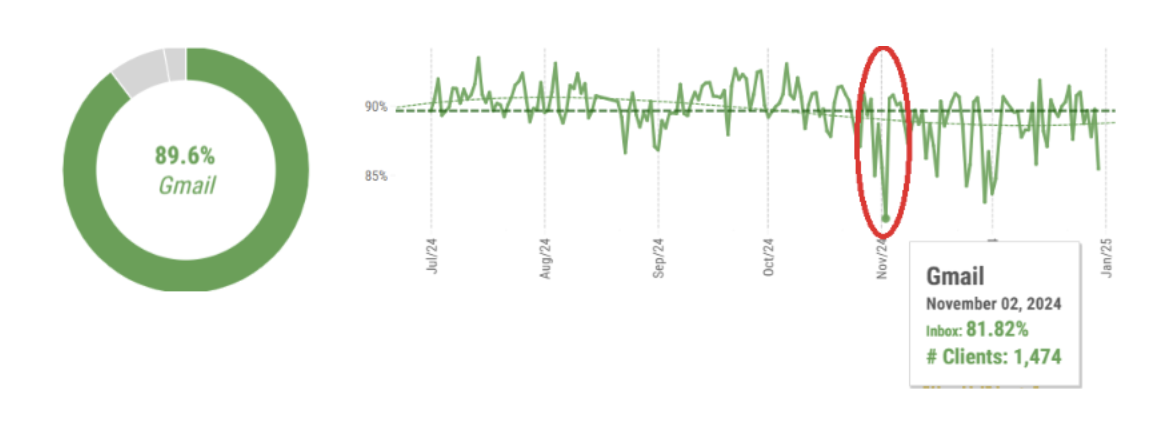
And they did. Average inbox placement rates across MAGY dropped by more than 5 percent during the week before election day—and critically, this wasn’t limited to political mailers. The drop hit all legitimate, permission-based email marketing activity across the board.
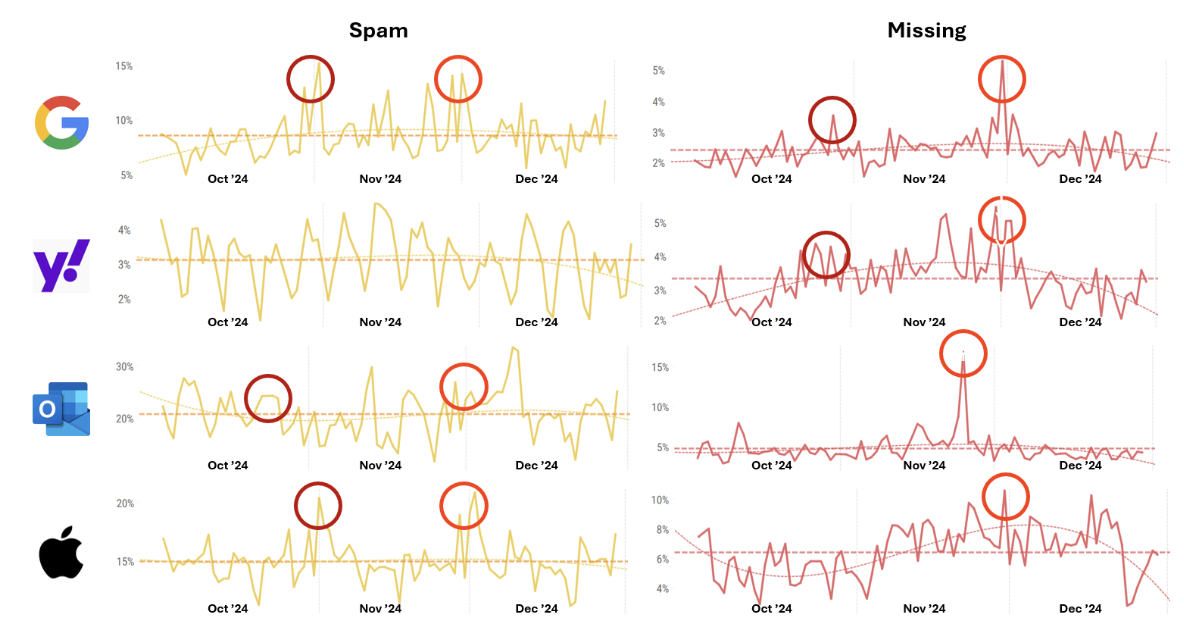
To understand why, it helps to know how non-delivery actually works. There are two levers MBPs pull when they’re under pressure: mail placed in recipients’ junk folders (Spam) and mail rejected outright (Missing). Both spiked sharply in election week. The data below shows how election week compared to the Q4 2024 quarterly benchmark—and how it stacked up against Black Friday and Cyber Monday four weeks later.
| Weighted Avg. | Q4 ’24 Benchmark | Election Week | Black Friday | Cyber Monday |
|---|---|---|---|---|
| Spam | 9.2 percent | 13.6 percent | 13.1 percent | 13.1 percent |
| Missing | 3.1 percent | 4.1 percent | 5.5 percent | 4.3 percent |
| Combined | 12.3 percent | 17.6 percent | 18.5 percent | 17.4 percent |
The combined non-delivery rate during election week was 1.5x the quarterly benchmark—almost identical to the pressure seen on Black Friday and Cyber Monday. Against average US sending volumes of roughly 10 billion emails per day, that translates to nearly half a billion additional emails failing to reach the inbox every single day. At an average value of $0.11 per email (Klaviyo), that’s approximately $50 million per day in lost revenue—not because email marketers did anything wrong, but because of the engagement pressure the election was creating for the channel as a whole.
Why does this happen?
The major MBPs (especially Gmail) have always been highly responsive to subscriber engagement signals. Positive signals—clicks, forwards, replies—are associated with high-quality programs whose subscribers genuinely want to receive messages. Negative signals—spam complaints, deleted-unread—push mail toward the spam folder.
We analyzed complaint data from the Validity Intelligence Network, tagging emails with common political terms (“election,” “vote,” “donate,” “president,” etc.) to separate political from non-political senders. Both groups showed above-average complaints in the pre-election period—but here’s what stands out: the peaks in the pre-election window were higher than those seen during Black Friday/Cyber Monday four weeks later.
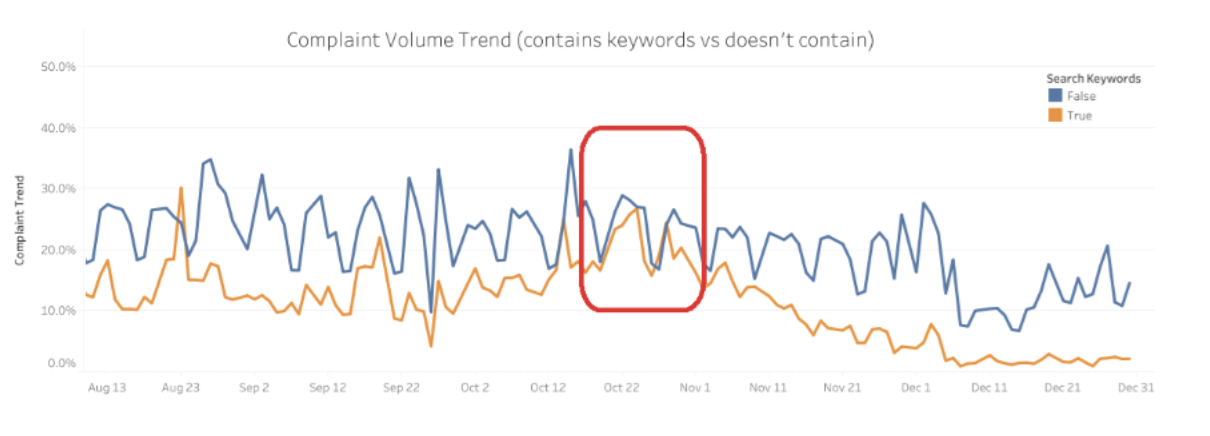
The inference is clear: political campaigns don’t just generate complaints for themselves—they contribute to increased negative sentiment across the entire email channel.
Political mailers are notorious for ignoring best practices—high frequency, aggressive language, minimal targeting—and the spam complaints that follow are no coincidence.
That said, our data shows interesting nuance: donation-focused emails from political programs generated spam complaints at one-third the rate of content and news emails from the same senders. The fundraising mechanics weren’t the core problem—it was how political content was being framed and presented.
How senders responded in 2024
Looking at average daily campaign volumes from Validity customers during the pre-election period, the data is striking: average daily campaigns dropped by 5–10 percent in the four weeks leading up to election day, with many senders ramping back up only after the election dust settled.
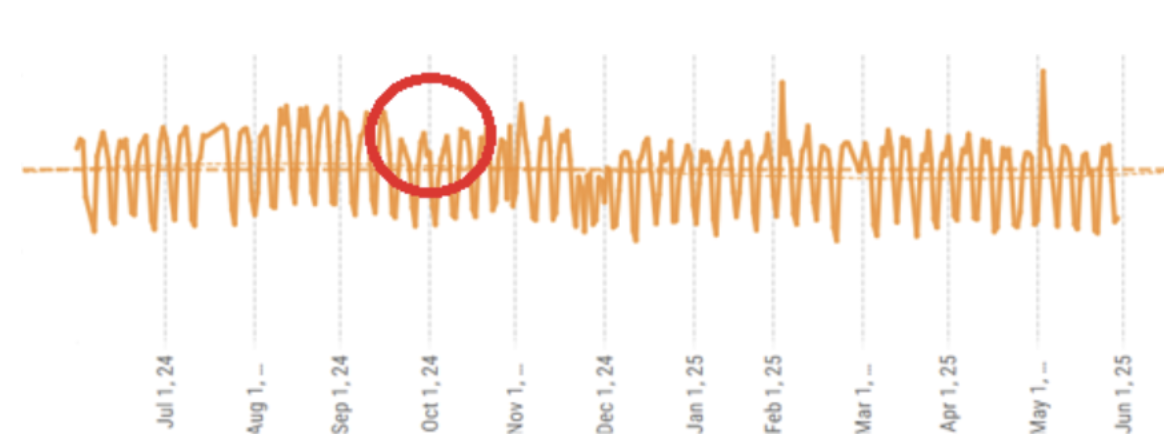
But the story wasn’t uniform. Using Validity data, we compared sending frequency in the week immediately before the 2024 election with the same week in 2023 (no election year):
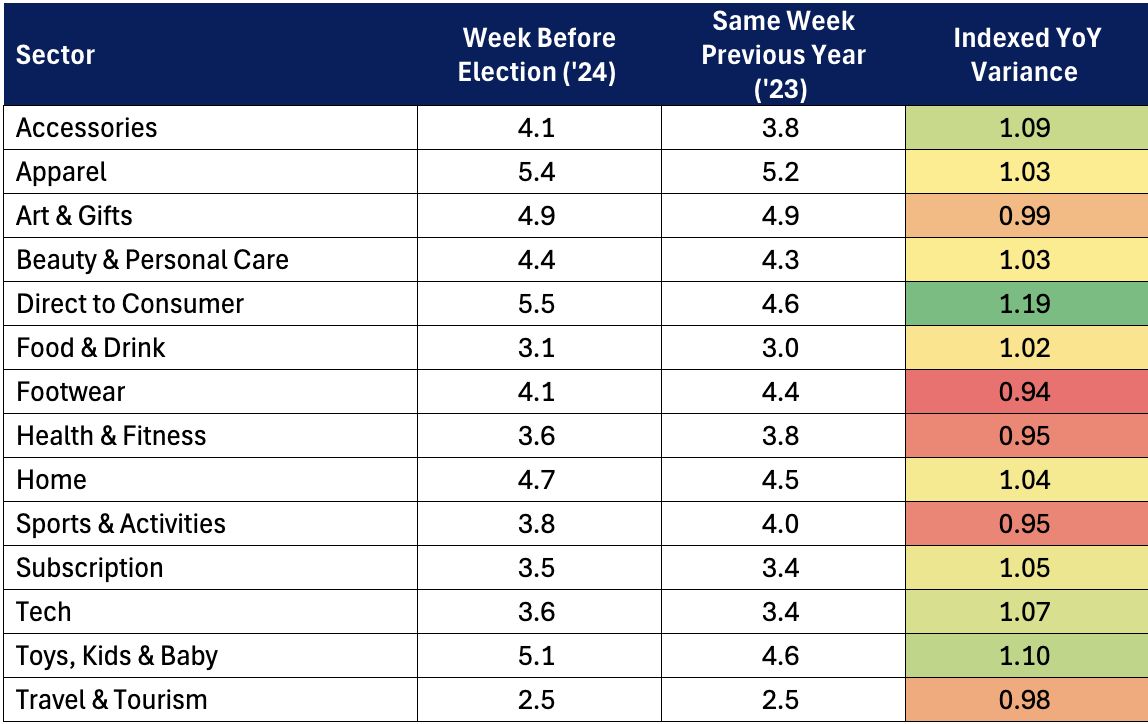
(Note: This measures average messages received by a typical email subscriber, not total campaigns sent.)
D2C, Toys/Kids/Baby, and Accessories all increased activity during election week. Footwear, Health & Fitness, and Sports & Activities pulled back. For sectors that under-indexed, the 2026 midterms may represent an opportunity to do more.
Will 2026 look different?
Possibly. A few developments since 2024 are worth watching.
First, overall inbox placement rates have declined. After hitting a high-water mark of 87.2 percent last year, global IPRs trended downward—running at 84.5 percent for Q2 2026. The starting point is softer heading into this election cycle.
Second—and this may actually help commercial senders—MBPs have significantly tightened bulk sender requirements. Non-compliant senders increasingly see their emails blocked or filtered to spam. Political mailers, which typically generate high complaint rates, may see a much larger share of their volume suppressed before it can affect inbox sentiment for everyone else.
Third, the major MBPs have rolled out a wave of AI-powered inbox features over the past 18 months. Gmail’s relevance-sorted Promotions tab, Gemini for Gmail, Microsoft Copilot—these tools are nudging subscribers toward more conversational, high-engagement inbox experiences. Low-engagement senders become less visible in the inbox. If political mailers can’t generate strong engagement signals, they’ll be filtered before reaching inboxes at scale. Less visibility means less pressure on the channel overall.
Should you play along?
Scaling back during election season isn’t the right call for every sender. For some brands, election season is a genuine opportunity to align with themes of choice, freedom, and civic duty that resonate broadly with consumers.
We pulled examples from Validity’s data showing how brands leaned into election themes in 2024—from patriotic product tie-ins and public service announcements to clever wordplay and humor. The most successful approaches shared a few things in common: they stayed non-partisan, kept the politics light, and found a natural connection between voting and their own products or brand values. Brands that used humor kept it broad enough to land across the political spectrum.
The key guardrail is brand fit. Overtly political messaging risks alienating a significant portion of your audience. Most of the brands that embraced election themes in 2024 were smaller businesses—likely less risk-averse about potential brand exposure. Larger brands, for the most part, stayed focused on Black Friday preparation and didn’t look up.
The bottom line
The 2024 data makes a strong case that election season is a deliverability pressure point for everyone—not just political mailers. Inbox placement drops, complaint rates spike, and the pressure peaks well before Black Friday. Your best defense is the same as always: maintaining a strong sender reputation, a healthy list, and a clear sense of your timing strategy heading into November.
There’s reason to think 2026 may be somewhat less disruptive—but that’s not a reason to stop watching your metrics. And if you do want to tap into election themes creatively, the brands that did it well in 2024 kept things light, non-partisan, and rooted in their own products. As a general rule: civic pride travels. Overt politics doesn’t.
Looking for more in-depth deliverability trends? Check out the 2026 Email Deliverability Benchmark report to see how your performance compares to global and industry standards.