Key Takeaways
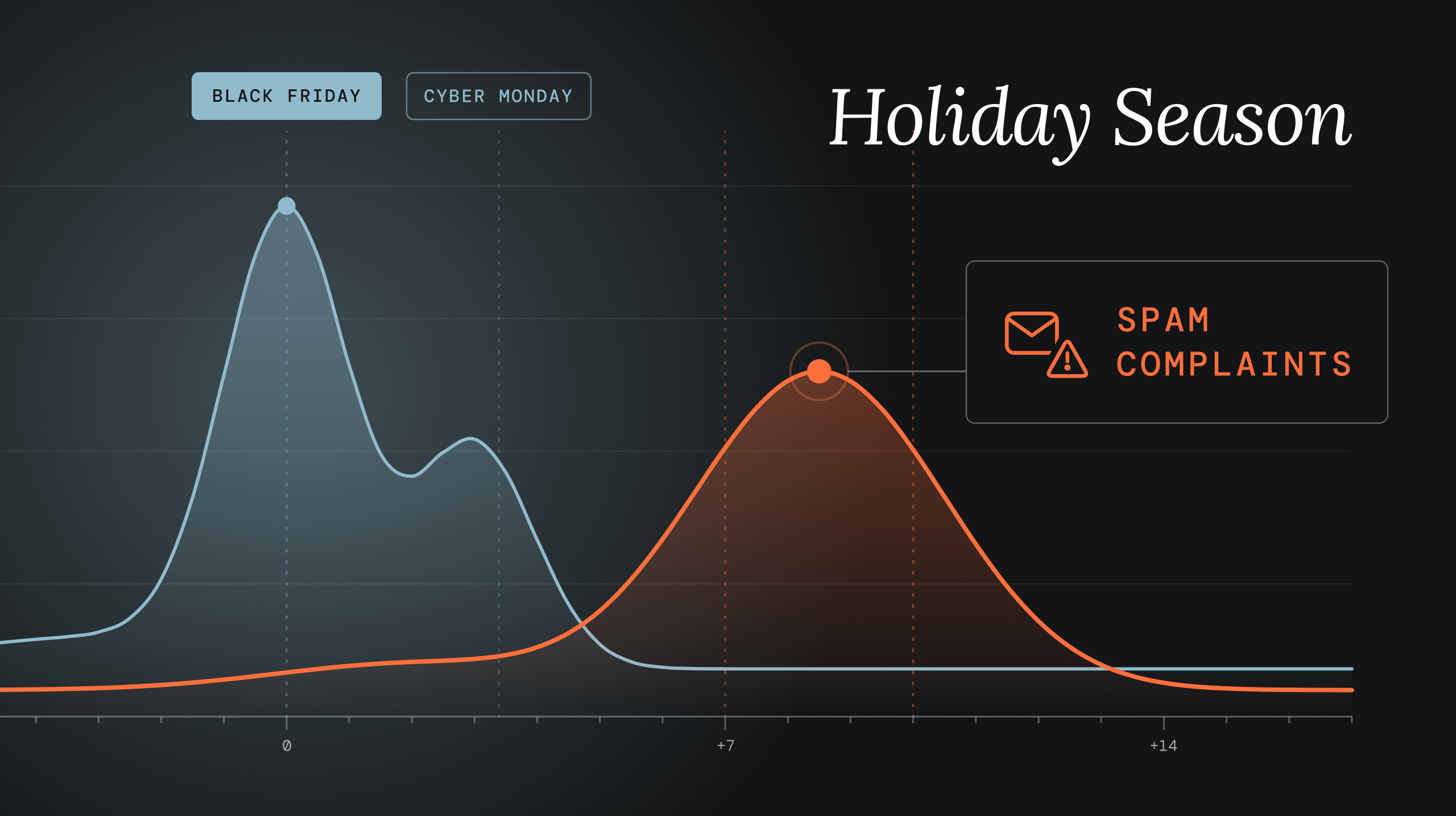
- Spam complaints peak 7-10 days after Black Friday, when subscribers find expired offers.
- Panic sending costs senders an extra 4.6 percent of inbox placement over a year.
- Senders should respond by cleaning lists early, suppressing expired offers, and testing emails for AI summaries.
There’s an old saying that those who fail to learn from history are doomed to repeat it —and it certainly applies to email marketing. Each year’s big learnings from events like Black Friday shape the following year’s tactics and (hopefully) drive an ongoing cycle of improved performance and revenue.
With this year’s holiday sale season fast approaching, we used the Validity Intelligence Network (VIN) to highlight last year’s key inbox placement rate (IPR) trends, predict whether we’ll see them again, and explain how senders in all industries should adapt to get the most out of the season.
When does the “danger window” open?
Our 2025 data surfaced some interesting trends, several at odds with established convention:
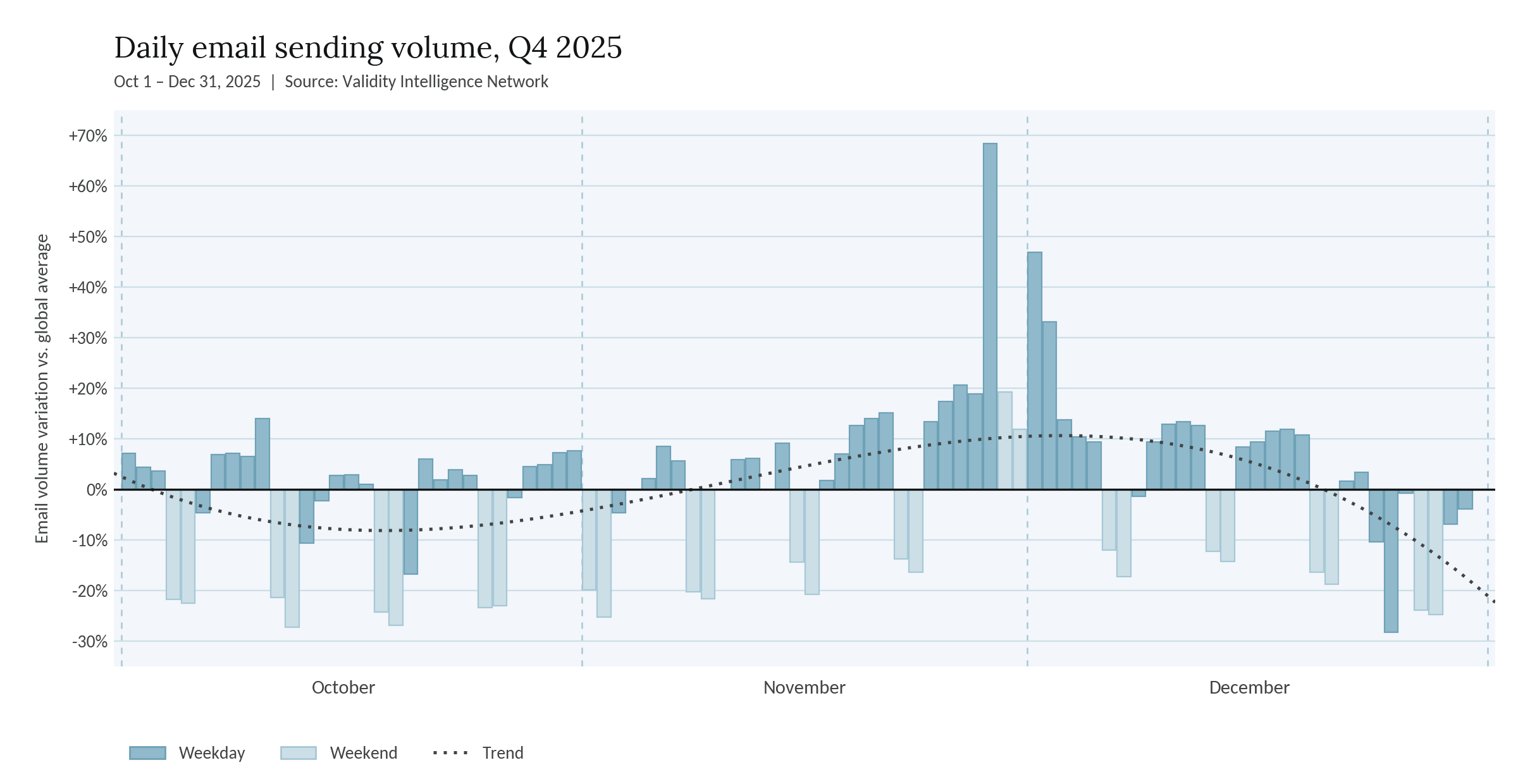
- Sending volumes: We hear that Black Friday has become “Black November,” but early-November sending activity was only 10-20 percent above the 2025 weekly average. Volume climbed only during Black Friday week itself, peaking at 75 percent above average.
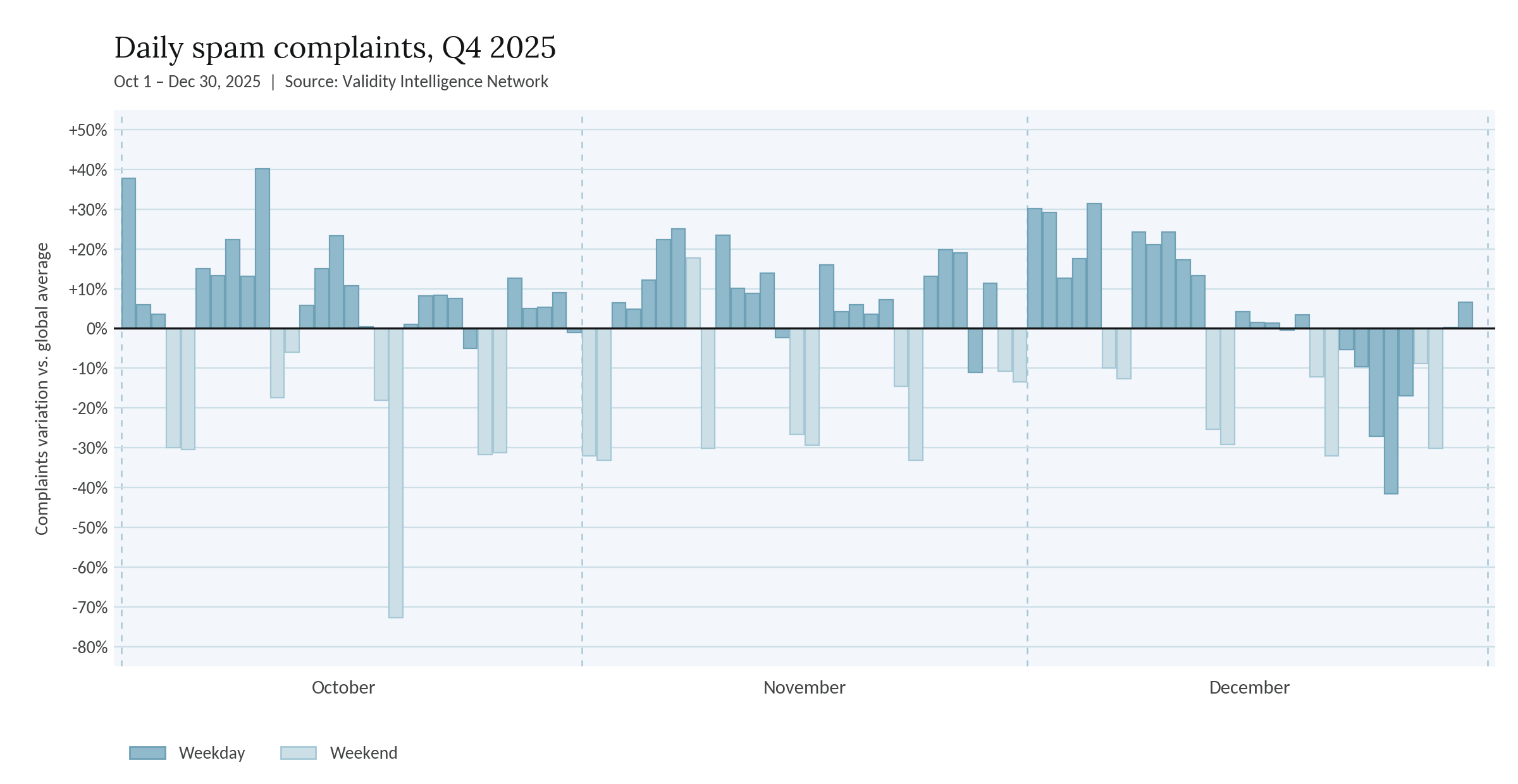
- Spam complaints: Complaints rose a modest 10 percent during Black Friday week, but the real damage came 7-10 days later, as subscribers kept finding messages for promotions that had already expired.
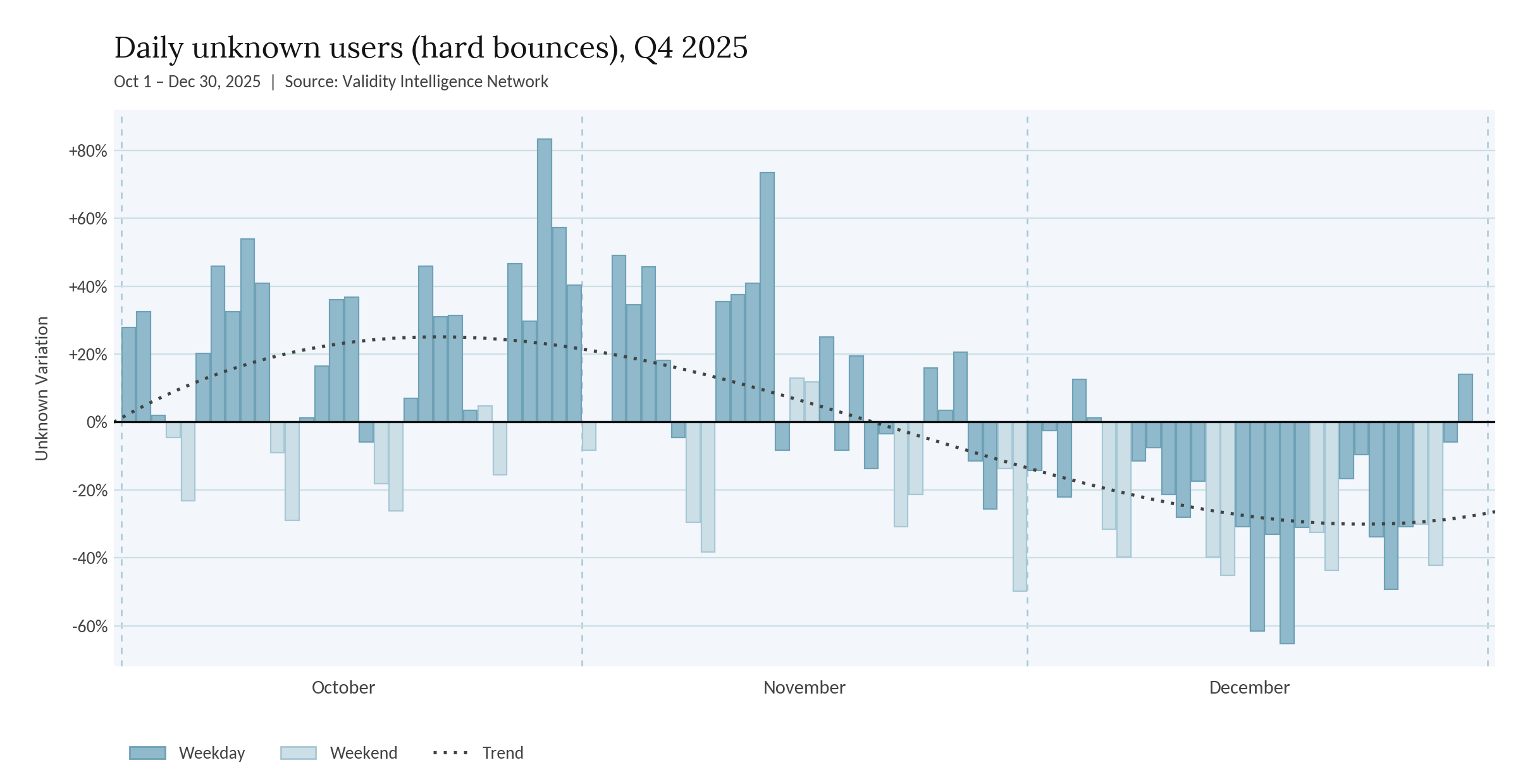
- Unknown users (hard bounces): This metric spikes well before Black Friday, running 50-60 percent higher from mid-September to mid-November. We know many senders run re-activation campaigns during this period, which effectively “scrub” their lists.
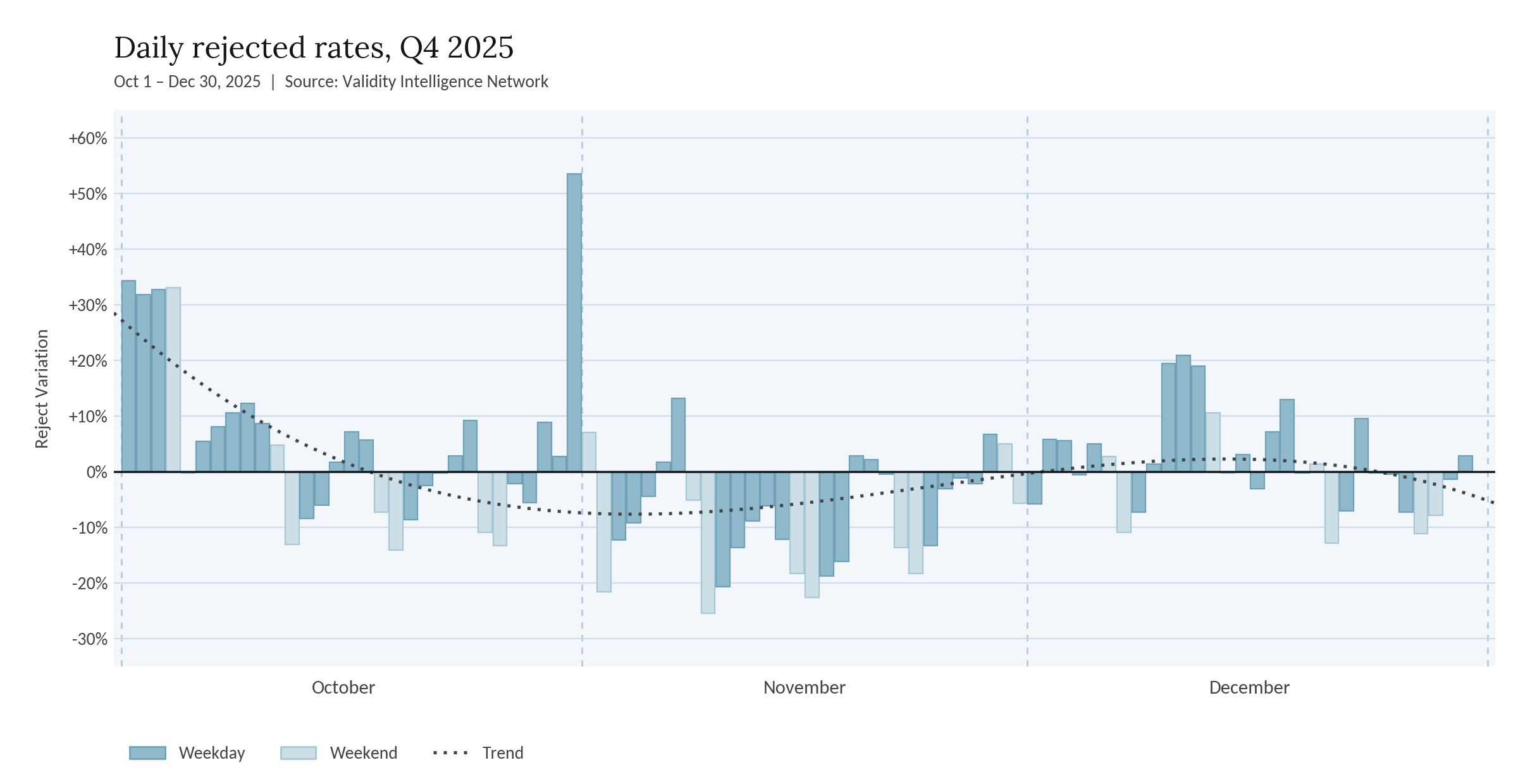
- Rejected rates: As mailbox providers respond to complaints and unknown users, this metric reflects their behavior. Rejected rates are much higher during October, peaking around Halloween, settling down during November, and spiking again after the Black Friday long weekend.
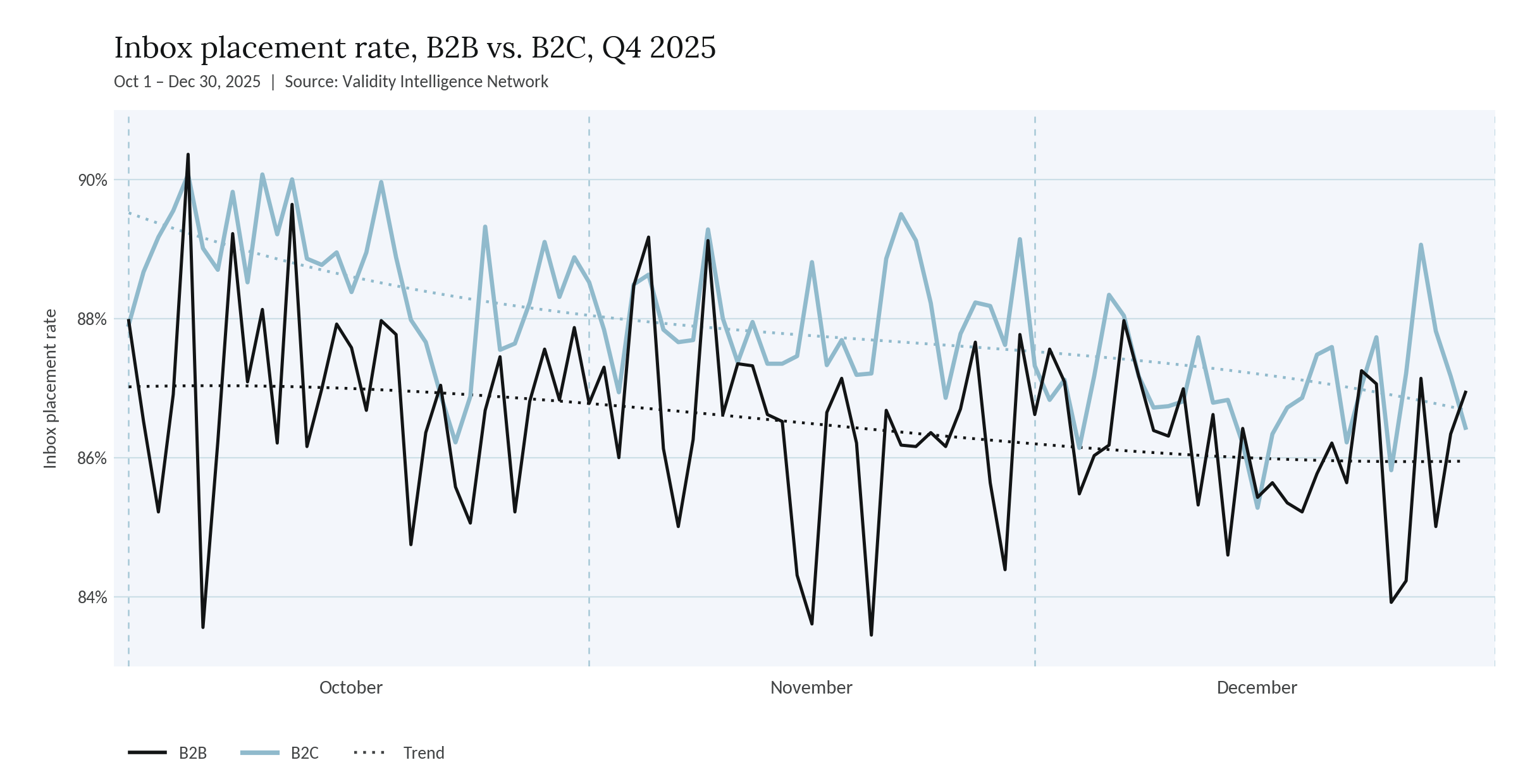
- Inbox placement: The traditional Black Friday inbox placement profile (which called for a big dip) has evolved into something more nuanced. Last year IPRs dipped before and after the Black Friday long weekend but were higher (by three percent) over the weekend itself. As you can see from the graph below, B2B and B2C senders went their separate ways around Black Friday and Cyber Monday (more on this later), but the downward trend post-holiday weekend demonstrates the real damage that happens in the aftermath. This is when subscriber fatigue kicks in and trailing complaints are processed
In recent years, mailbox providers (MBPs) have placed a premium on best practices and on timely, relevant messages. Last year, senders who got this right were rewarded with good IPRs even during this high-pressure period.
Will we see the same trends in 2026?
Possibly, but there are no guarantees. Major changes in the email marketing landscape could make this year very different.
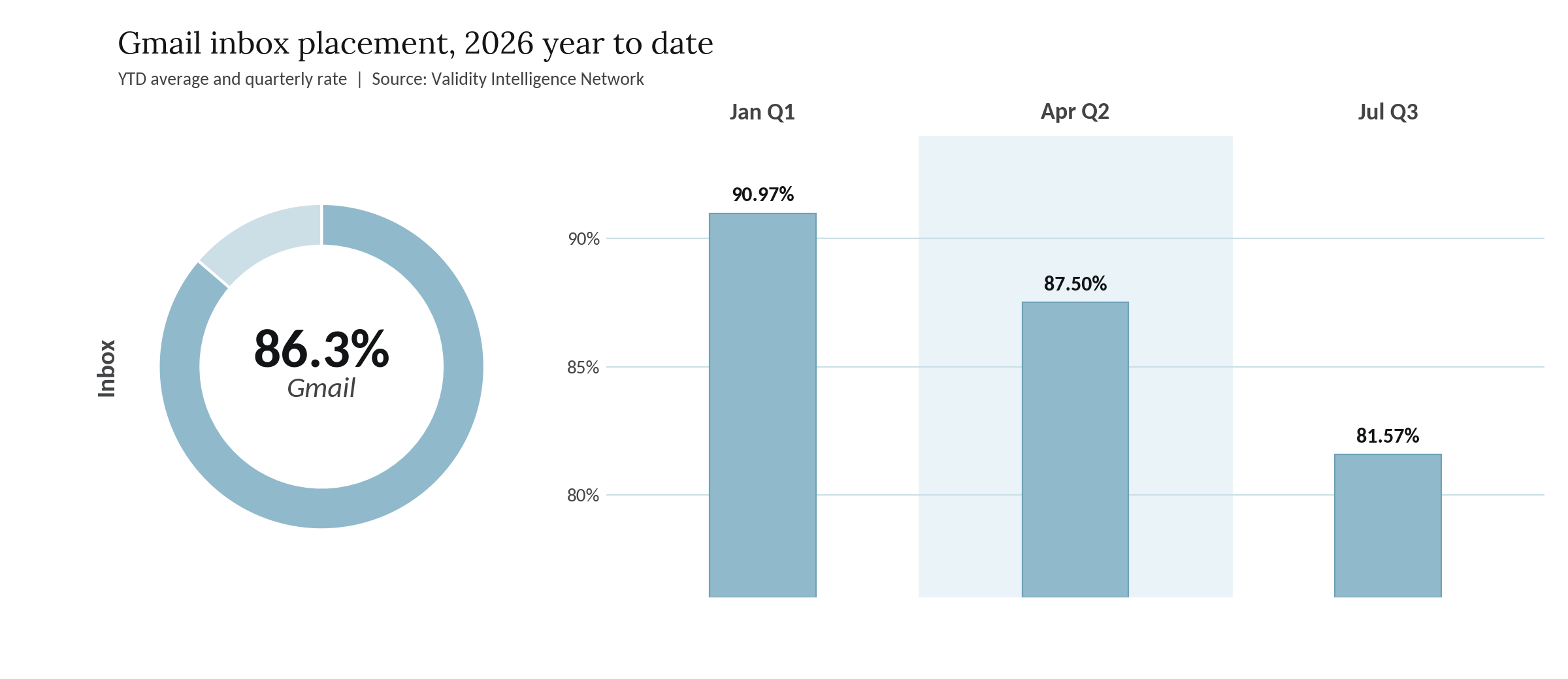
- Global deliverability has declined during 2026, especially at Gmail, where it’s dropped by 9.7 percent across the first nine months of the year.
- It’s the first Q4 in which most email programs face new engagement challenges from AI-generated email summaries and subscribers’ use of AI agents.
- The overlapping US midterm elections will add pressure on deliverability and engagement through inbox overload.
Is there a B2B vs B2C “holiday readiness” gap?
Deliverability challenges for B2C and B2B senders have converged in recent years. Most B2B subscribers use Office 365 and Google Workspace, where placement and filtering infrastructure is similar to B2C. The main additional barrier is corporate spam filters like Proofpoint.
This means B2B placement during this period looked similar to B2C—with one big difference. B2C placement rose three percent on Black Friday itself, while B2B placement fell seven percent.
B2C senders are generally more familiar with the increased reputation management needed during this period. Also, many B2B senders don’t have Black-Friday-worthy offerings and might be better off avoiding this period entirely.
There’s plenty for B2B senders to learn from B2C campaigns. Check out our recent conversation with Peloton about holiday sending tips that apply to B2B on State of Email Tactics.
Is there a lasting penalty for “panic sending”?
In previous years, senders who aggressively ramped up volume and frequency for Black Friday were penalized with degraded reputation and deliverability well into the new year. The effect is harder to see in late 2025 because deliverability was already getting harder for all senders.
However, the inbox placement decline was greater for higher-frequency, higher-volume Black Friday senders: 0.019 percent per day vs. 0.007 percent. That’s small in absolute terms, but almost 3X greater in relative terms. Over a year, these less disciplined senders will lose an additional 4.6 percent of inbox placement (6.9 percent vs. 2.6 percent).
What should marketing leaders know?
For revenue leaders, those dips have a price tag. At five cents of revenue per email, the additional 4.6 percent costs these senders $2,300 per one million emails sent by the end of the year.
In separate research, we’ve seen that email programs subject to new-generation privacy laws (like GDPR) enjoy much better IPRs. Stronger consent, greater transparency, and broader choice all align with what mailbox providers want from responsible senders. All programs should implement these tactics to future-proof their deliverability.
What can we learn from the Validity Intelligence Network?
Understanding the data from previous years can give you the full competitive advantage when building your strategy. Here are a few tips to send successfully:
- Don’t pull the pin too early—that’s a key driver of spam complaints. Relevance (and engagement) are stronger closer to the event. This can vary slightly by age group, so be sure to take your segments into consideration.
- Clean your email lists in advance. Some senders will rely on blasting win-back campaigns to force bounce notifications. All this does is drive up unknown users.
- Promote your preference centers. Let subscribers choose what they receive and how often.
- Test your content rigorously for AI compatibility. What summaries will AI generate, and will agents surface your most important content?
- Use dynamic content to suppress time-sensitive offers once they expire. Messages that are clearly irrelevant drive more spam complaints.
- Messages that are clearly no longer relevant drive increased spam complaints.
This list of strategy recommendations might feel like a lot to keep track of, but with Validity Engage, you’ll have a partner to help you along the way and do the heavy lifting for you. Engage runs automated pre-send checks on data quality, email verification, and rendering, and monitors deliverability across every send, so problems get caught before they reach your subscribers and your peak season revenue stays intact.
Learn more about Validity Engage.